Gear Reality Check: What's Actually in Your Pack vs. What the Industry Sold You
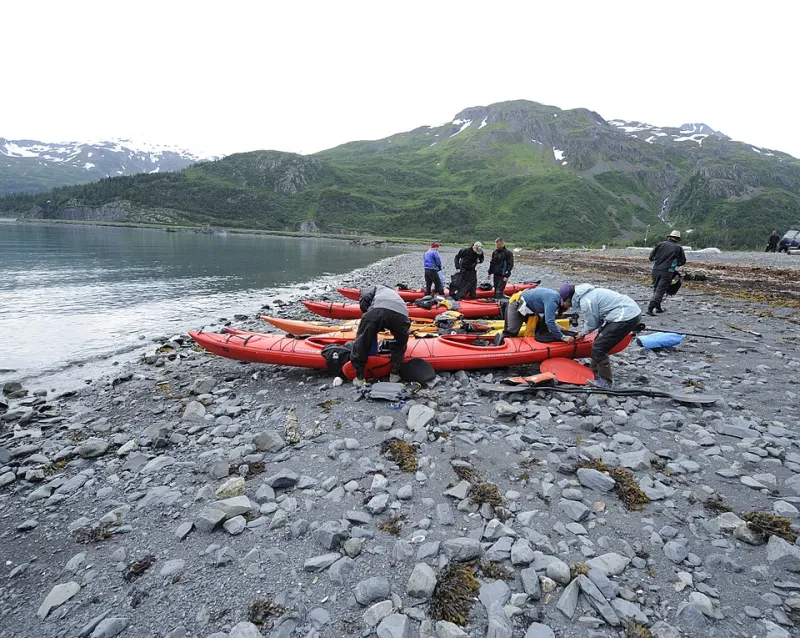
Photo: Steven White, Public domain, via Wikimedia Commons
Let's start with an uncomfortable exercise. Go to wherever you store your outdoor gear — the garage, the spare bedroom, the closet that's become a graveyard of good intentions — and look at it. Really look at it. Count the items you've used in the last twelve months. Now count everything else.
For most people, that second number is embarrassingly large.
This isn't a character flaw. It's the entirely predictable result of being a curious, enthusiastic person operating inside a marketing machine that is extraordinarily good at its job. The outdoor industry in the US generates billions of dollars annually, and a significant chunk of that revenue comes not from equipping people for adventures they're actually taking, but from selling them a vision of the adventurer they imagine themselves becoming.
Those are two very different things. And the gap between them is costing you real money.
How Gear Buying Became Its Own Hobby
Somewhere in the last decade or so, gear acquisition quietly became a substitute for actual adventuring for a lot of people. The research rabbit holes, the comparison threads on Reddit, the YouTube reviews that make a new tent feel like the one thing standing between you and your best season ever — it's genuinely enjoyable. It scratches the adventure itch without requiring you to take any time off work or deal with the logistics of actually going somewhere.
Outdoor brands know this. They've built entire content ecosystems — YouTube channels, Instagram accounts, ambassador programs — designed to keep you in a permanent state of pre-adventure excitement. Every product launch is framed around the adventures it will unlock. The implicit message: you'll go once you have the right kit.
Spoiler: the right kit is never quite complete. There's always something new that promises to be the final missing piece.
The Anatomy of an Impulse Purchase in Adventure Clothing
Here's how it usually goes. You're on a trip — or more likely, watching someone else's trip on YouTube — and you notice a problem. Your rain jacket is a little heavy. Your sleeping pad is fine but not great. Your headlamp works, but there's a newer model with a feature you didn't know you needed until thirty seconds ago.
The gear industry has a name for this feeling. They call it 'pain point identification.' You call it research. What it actually is, most of the time, is a solution in search of a problem.
The jacket you have keeps you dry. The sleeping pad keeps you off the ground. The headlamp lights up the dark. The marginal improvement offered by the upgrade — a few ounces, a slightly higher lumen count, a zipper in a different location — rarely translates into a meaningfully better experience on the trail. But it feels like it will. And that feeling is worth a lot of money to the companies selling it to you.
Running an Honest Gear Audit
Here's a framework for getting real about what you own and what you actually need.
Step one: The twelve-month rule. Pull everything out and ask one question — did I use this in the last year? Not 'could I use it,' not 'will I use it on the trip I'm planning,' but did I actually use it in the last twelve months. Anything that doesn't make the cut goes in a separate pile.
Step two: Categorize your non-use pile. There are generally three reasons something didn't get used. Either the activity it was purchased for isn't something you actually do anymore, it was bought for a specific trip and never used again, or it was purchased speculatively for something you haven't gotten around to yet. Each category tells you something different about your buying habits.
Step three: Stress-test your 'essentials.' Now look at the gear you do use. Would a cheaper or simpler version have done the same job? This isn't about whether the premium option is genuinely better — sometimes it is — but about whether the difference matters to the way you actually adventure. A weekend car camper who occasionally day hikes does not need a $600 ultralight shelter. That's not a judgment. It's math.
Step four: Calculate the cost-per-use. Take what you paid for an item and divide it by how many times you've actually used it. A $200 jacket you've worn on forty trips is a better investment than a $90 jacket you've worn twice. This single calculation reframes how you think about gear value in a way that no product review ever will.
Before You Buy Anything New
Once you've run the audit, you'll probably find that your existing kit covers most of what you actually do. That's the uncomfortable truth that the industry doesn't want you to sit with too long. So here are a few filters to run before any future purchase.
Borrow or rent it first. If you're eyeing gear for an activity you don't do regularly, rent the equipment for your next trip. If you come back and still want it, that's a signal worth trusting. If you forget about it until the algorithm surfaces a sale, that's a signal too.
Wait thirty days. The desire for most gear purchases fades significantly within a month if you don't act on it immediately. The industry knows this, which is why limited-time sales and 'while supplies last' messaging are so pervasive. Give yourself the thirty days. See what survives.
Ask whether the real barrier is gear. Honestly, this is the most important one. Are you not going on more trips because your current gear is genuinely inadequate? Or are you not going because of scheduling, finances, motivation, or the mental friction of planning? New gear doesn't solve those problems. It just gives you something to organize in your garage while the real barriers stay put.
The Gear You Have Is Probably Good Enough
This isn't an argument for never buying anything. Gear wears out. Activities change. Genuinely better technology comes along. There are real upgrades worth making.
But there's a version of adventure culture that exists entirely outside the consumer cycle — one where the focus is on getting out with what you have, going further than you went last time, and measuring progress in experiences rather than equipment. That version is cheaper, less cluttered, and honestly more in the spirit of what drew most of us to the outdoors in the first place.
Your next great adventure is probably not waiting on a gear purchase. It's waiting on you.

