When Passion Becomes a Problem: The Dark Side of Adventure Obsession Nobody Wants to Name
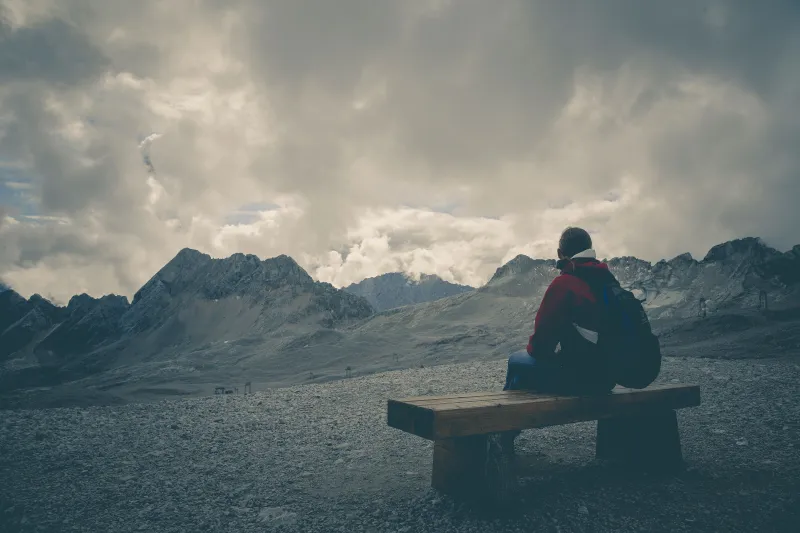
Photo: solo hiker sitting alone on mountain summit looking contemplative, via images.pexels.com
There's a particular kind of person who gets celebrated in adventure circles. They're always on a trip, always planning the next one, always pushing harder than last time. Their social feed is a highlight reel of summits, rapids, and remote campsites. The community calls them inspiring. Their friends call them goals. And somewhere along the way, nobody stops to ask whether the person underneath all those miles is actually doing okay.
Because here's the thing: the behaviors that adventure culture rewards most loudly — escalating risk, relentless pursuit, physical self-destruction in service of the next experience — follow a pattern that addiction researchers know very well. We just don't call it that. We call it passion. We call it commitment. We put it on the cover of magazines.
The Reward Loop Nobody Talks About
Every time you summit a peak, run a gnarly river section, or complete a multi-day push through brutal terrain, your brain releases a cocktail of neurochemicals — dopamine, adrenaline, endorphins — that feels genuinely spectacular. That's not a flaw in the system. That's the system working exactly as designed.
The problem starts with what happens next. Your brain recalibrates. The experience that floored you last year starts to feel ordinary. The trail that felt like an adventure becomes a warm-up. Psychologists call this hedonic adaptation, and it affects everyone who chases intense experiences. You need more to feel the same thing.
For a lot of adventurers, that escalation feels like growth. And sometimes it is. But there's a line — blurry and easy to miss — where growth stops and compulsion begins. Where you're not choosing to push harder because you want to. You're doing it because stopping feels unbearable.
What the Culture Gets Wrong
American adventure culture has a complicated relationship with the concept of enough. The entire marketing ecosystem — the gear brands, the athlete sponsorships, the YouTube channels racking up views on suffer-fests — is built on the idea that more is always better. More vertical. More remote. More dangerous. More days in the field.
When someone takes a rest season, the community whispers about whether they've lost their edge. When someone scales back to shorter, lower-stakes trips, it gets framed as settling. The unspoken message is relentless: real adventurers don't slow down.
That message does real damage. It creates an environment where people hide exhaustion, push through injury, and keep booking trips they can't afford — financially, physically, or emotionally — because the alternative is admitting something is wrong. And in a community where toughness is the ultimate currency, admitting something is wrong feels like losing.
Recognizing the Pattern in Yourself
So how do you tell the difference between genuine passion and something that's crossed a line? It's not a clean distinction, but there are questions worth sitting with.
Are you adventuring toward something, or running from something? There's a meaningful difference between loving the mountains and needing the mountains to avoid what's waiting for you at home. Both people might log the same mileage. Only one of them is actually present on the trail.
What happens when you have to stop? Injury, work, family obligations — life interrupts adventure for everyone. If a forced pause produces something that feels more like withdrawal than disappointment, that's worth paying attention to. Irritability, depression, a sense of meaninglessness — these aren't just signs of missing the outdoors. They can signal genuine dependence.
Are your relationships collateral damage? Adventurers who've crossed into unhealthy territory often describe a slow erosion of everything outside the pursuit. Relationships get neglected. Work suffers. Financial stability takes hits that keep getting justified by the next trip. When the adventure becomes the only thing that feels real, everything else pays the price.
Has the risk level kept climbing regardless of consequences? This one matters. Healthy adventurers take calculated risks and adjust based on outcomes. Compulsive ones often escalate despite close calls, injuries, or genuine near-misses. The incident that should have been a warning becomes just another story to tell at the trailhead.
The Shame Trap
One of the crueler features of this particular cycle is how well the adventure community's values keep people locked inside it. Toughness, self-reliance, the ability to suffer gracefully — these are genuinely useful traits in the backcountry. They're genuinely destructive when they become reasons to never ask for help.
A lot of adventurers who are struggling don't reach out because reaching out feels like weakness. The same mental framework that helps you grind through the last miles of a brutal day hike becomes the thing that stops you from calling a therapist, having an honest conversation with a partner, or simply admitting that something has gotten out of hand.
This is where the culture has to do some self-examination. Celebrating resilience is fine. Weaponizing it against people who need support is something else entirely.
Finding the Line Without Losing the Love
None of this is an argument against chasing hard experiences. Adventure is genuinely transformative. Risk, pursued thoughtfully, teaches things you can't learn any other way. The goal isn't to soften the community or sand down the edges of what makes outdoor culture exciting.
The goal is to build enough self-awareness to know when the thing you love has started running the show instead of you.
That looks different for everyone. For some people, it means being honest about why they're booking the next trip before they've processed the last one. For others, it means letting a season pass without a major objective and sitting with whatever feelings come up. For some, it means talking to a professional — ideally one who understands outdoor culture and won't treat your passion as the problem itself.
The adventure community talks constantly about knowing your limits in the field. Reading terrain, assessing weather, recognizing when a route is beyond your current abilities — these are survival skills. Recognizing when your relationship with adventure has become something you can't control? That's a survival skill too. It just doesn't make for a great summit photo.